Crystals or a hard lump inside a hanging moisture absorber do not automatically mean it has stopped working. For calcium chloride products, the important distinction is whether the original granules have clumped together in the upper section or crystals have appeared in the collected liquid below.
This guide explains the difference, what crystallization can mean for performance, and when to replace a bag. It applies to calcium chloride moisture absorbers, rather than silica-gel packs or electric dehumidifiers.
First, identify where the solid material is
| What you see | Possible explanation | What to check |
|---|---|---|
| Upper granules become a firm lump | Clumping during moisture uptake | Bag integrity, correct activation and continued collection |
| Ice-like crystals in the lower liquid chamber | Crystallization from calcium chloride solution | Temperature changes, liquid level and the condition of the bag |
| A hard or wet product before first use | Possible moisture entry during storage, or another product-specific cause | Outer packaging, storage conditions and supplier instructions |
| Liquid outside the bag or a damaged seal | A containment problem, not just a change in appearance | Stop using the damaged unit and follow disposal instructions |
1. Why do the upper granules become hard?
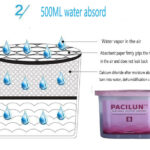
Calcium chloride takes up water vapour from the surrounding air. During use, the material can become damp and form a solid mass before gradually dissolving into a concentrated salt solution, or brine. Liquid then passes into the collection chamber, depending on the bag design.
A hard lump is therefore not, by itself, evidence that the absorbent is defective. DampRid’s published instructions for its hanging products describe solidification during moisture absorption and advise users not to break up the mass. That supports the general explanation; instructions and performance claims still need to be confirmed for the exact product you buy.
2. Why do crystals form in the collected liquid?
The lower chamber contains calcium chloride solution, not plain water. Its solid–liquid behaviour depends on both temperature and concentration. Under suitable conditions, calcium chloride hydrate crystals can form in the brine, sometimes creating an ice-like mass.
A temperature change can trigger this behaviour. OxyChem’s calcium chloride technical guidance explains that crystallization depends on solution concentration and temperature. There is no single crystallization temperature that applies to every used moisture absorber bag.
Such crystals may dissolve again if conditions change or the solution becomes more dilute as additional water is collected. This is not a promise that every formation will disappear within a set time. Do not try to force the process by adding water, heating or opening the bag.
Does crystallization affect moisture absorption?
Crystallization does not automatically mean the bag has lost all moisture-absorbing ability. However, appearance alone cannot establish that its absorption rate is unchanged.
For an intact, correctly activated bag, some solidification can occur during normal use. Whether a particular lump or crystal formation affects performance depends on the formulation, exposed absorbent area, bag construction, temperature and humidity. A comparative performance claim requires testing under matching conditions.
For example, “the product may continue absorbing moisture” is different from “crystallization has no effect whatsoever.” We do not recommend making the second statement without supporting results for the exact product.
Crystals also do not reset the product’s service life. The amount of absorbent and the safe collection capacity remain limited. Continue following the replacement instructions rather than assuming that a solid-looking bag is new or fully effective.
How to check whether the bag can remain in use
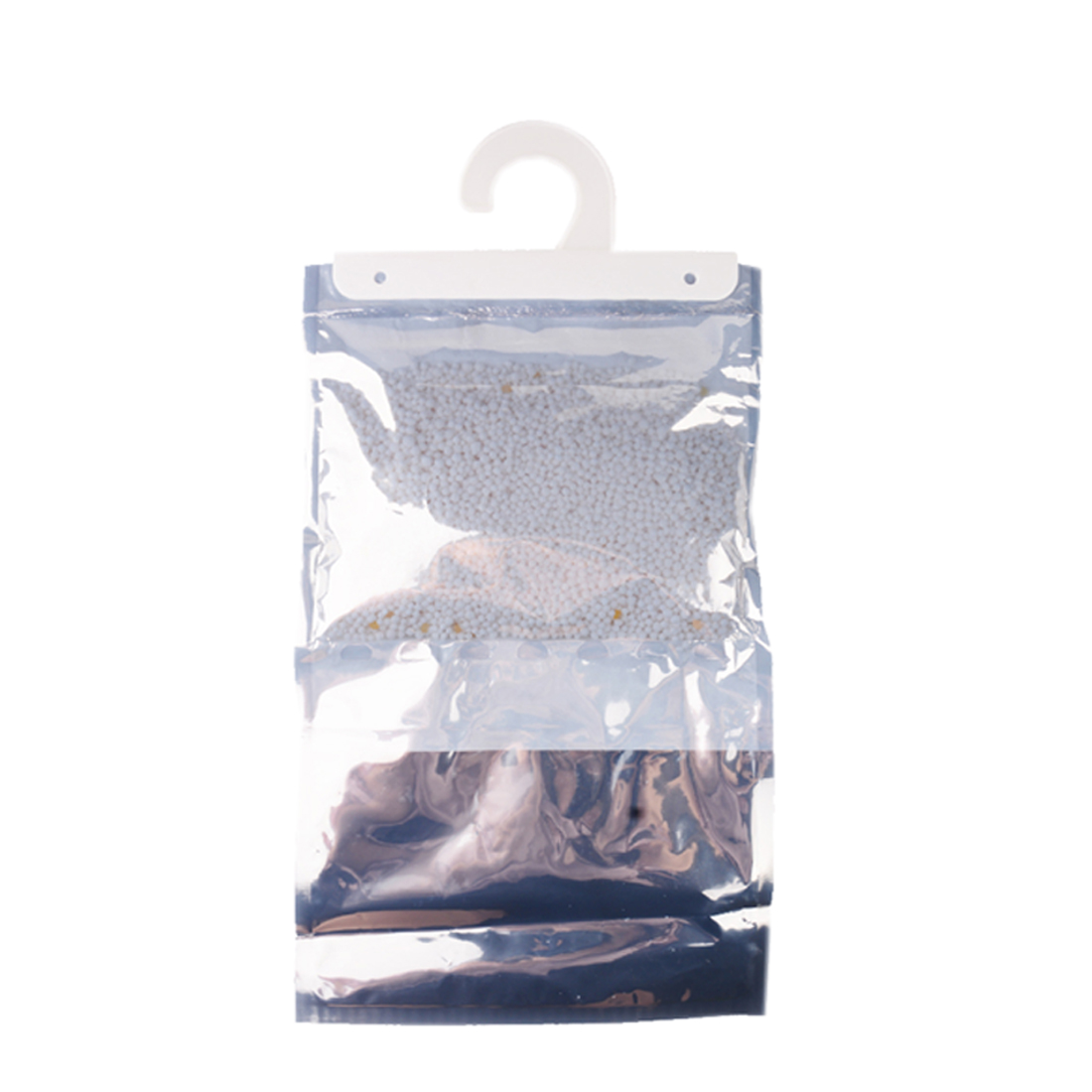
Check the package first. Look for leaks, tears, damaged heat seals or a deformed collection chamber. Replace a damaged unit instead of trying to repair it.
Check activation and placement. Remove only the transport packaging identified in the instructions. Keep the moisture-permeable section intact, hang the bag upright and allow it to remain exposed to air rather than pressed tightly against clothing.
Check the replacement indicators. Use the maximum fill line, absorbent depletion guidance or other indicators specified for that model. Do not wait for a full reservoir to overflow simply because some crystals remain.
Observe in context. A short period without a visible increase in liquid does not prove failure: room conditions influence moisture uptake. If you remain concerned, record the conditions and ask the supplier to assess the product. For lifespan guidance, read How Long Do Moisture Absorbers Last?
What you should not do
Do not squeeze, strike or puncture a sealed hanging bag to crush the crystals. Do not cut the liquid chamber open to drain it for reuse unless the manufacturer specifically designed it for that purpose. Do not microwave, boil, place on a heater or attempt to recharge a disposable calcium chloride bag.
Keep the product upright and out of reach of children and pets. The collected liquid is a salt solution and should be handled according to the product label. If a spill occurs, follow the label and the guidance for the affected surface.
What if a new, unopened bag is already hard?
This deserves a different check from clumping during normal use. Moisture may have reached the absorbent during storage or transport, especially if protective packaging was compromised. Check the outer seal, packing date and storage history. Do not assume that every pre-use lump is harmless or that the batch has already failed.
For a wholesale enquiry, send the supplier the batch number, clear photographs, packaging condition and storage details. Where a performance concern exists, assess retained samples against the agreed product specification.
An OEM buyer’s checklist for crystallization complaints
Record whether the solid material is in the upper or lower chamber, when it first appeared, approximate temperature and humidity, liquid level, remaining granules, seal condition and product batch. Ask the manufacturer to compare samples under a defined test method rather than judging performance from one photograph.
Useful acceptance criteria include absorption over an agreed exposure period, drainage into the reservoir, seal integrity and clear replacement instructions. Avoid printing an unconditional “never crystallizes” or “always works exactly the same” claim without evidence.
Frequently asked questions
Are the ice-like crystals necessarily frozen water?
No. They can be crystals associated with the calcium chloride solution. Appearance alone is not enough to identify the exact solid phase.
Should I crush the hard lump to make the bag work faster?
No. Follow the instructions for the exact product. Breaking a lump by squeezing or striking a hanging bag risks damaging its containment.
Does a crystal-free bag always work better?
No. A visual comparison does not measure absorption. Compare products under matching temperature, humidity and exposure conditions.
Can I keep using a leaking bag if crystals are still present?
No. Remaining solid material does not make a leaking or damaged bag suitable for continued use.
Choosing a hanging moisture absorber for your brand
Zhongshan Haihong Houseware Co., Ltd. manufactures non-electric moisture absorber boxes, hanging bags and refill packs for OEM, ODM and private label projects. Explore our hanging moisture absorber supply options, compare boxes and hanging bags, or contact us about samples and specifications.
References
DampRid: hanging moisture absorber questions; OxyChem: Calcium Chloride Handbook; OxyChem: storage and handling background. These sources explain general behaviour; their product-specific claims and industrial handling methods are not instructions for our consumer hanging bags.