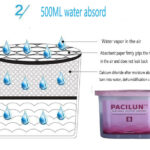
A moisture absorber box and an electric dehumidifier both deal with excess moisture, but they are different product categories. The calcium chloride boxes, hanging bags and refill packs manufactured by Zhongshan Haihong Houseware Co., Ltd. work without a power supply. They should not be described as miniature electric dehumidifiers.
This distinction matters when choosing a product, comparing capacity or building a private label range. A compact box for a wardrobe is designed for a different job from an appliance selected to control humidity across a room.
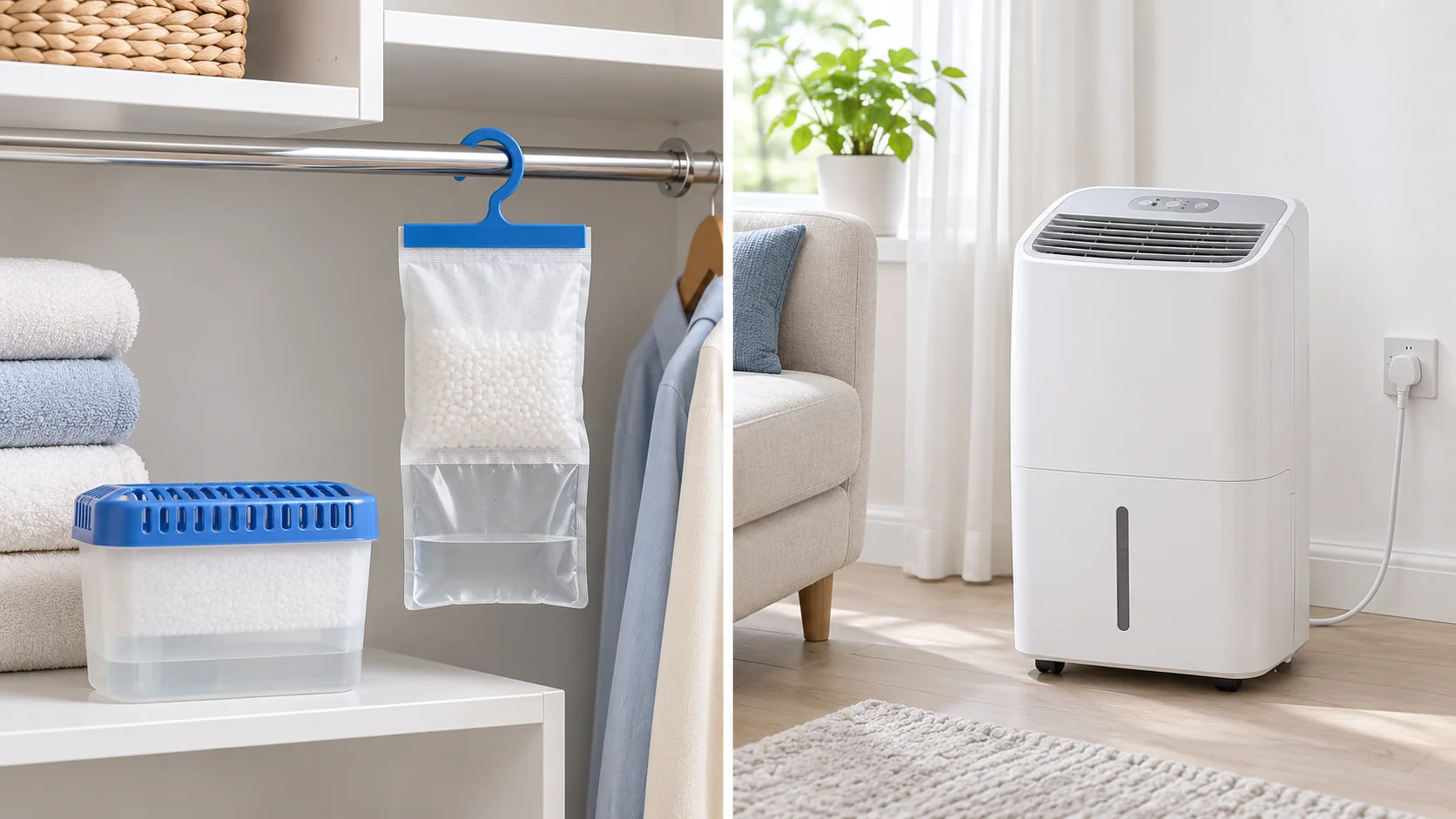
Why are these products often confused?
Search results may use names such as dehumidifier box, closet dehumidifier, moisture absorber and mini dehumidifier for very different items. A plastic housing or a liquid collection tank does not tell you how a product works.
Check three things first: Does it need electricity? What removes the moisture? Is it intended for an enclosed storage space or a whole room? These questions are more useful than comparing product names alone.
How a non-electric moisture absorber works
Calcium chloride is hygroscopic: it takes up moisture from surrounding air. As the absorbent takes up water, it gradually dissolves and forms a salt solution called brine. A suitable box or hanging-bag design collects that liquid in a separate reservoir. This is absorption by a consumable material, rather than water being condensed by a refrigeration circuit.
There is no powered fan or compressor in this type of product, so it needs no outlet and produces no motor noise. The absorbent is eventually used up. Replace the unit or add a compatible refill only if the container is designed to be refilled. Service life varies with temperature, humidity, air exchange, absorbent quantity and placement; a fixed number of days should not be assumed.
How an electric dehumidifier works
Many room dehumidifiers use a fan to move air across refrigerated coils, where moisture condenses and drains into a tank or hose. Other electrical models use different technologies. Power consumption, operating temperature limits and water-removal performance depend on the model.
For room humidity control, choose a device with appropriate tested performance for the space and conditions. Models with a humidistat can work toward a selected humidity setting; a passive calcium chloride box does not provide that same controlled set-point function.
Moisture absorber vs. electric dehumidifier: a practical comparison
| Question | Calcium chloride moisture absorber | Electric dehumidifier |
|---|---|---|
| Power supply | No electricity during use | Requires power during operation |
| Working principle | Consumable absorbent takes up moisture | Active moisture removal; technology varies |
| Typical use | Wardrobes, shoe cabinets and other local storage spaces, subject to product instructions | Room or building humidity management, subject to model capacity |
| Humidity setting | No automatic target-humidity control | Available on models with a humidistat |
| Ongoing care | Monitor liquid level; replace or use approved refills | Empty or drain the tank and maintain the appliance as directed |
| What to compare | Fill weight, tested absorption, reservoir design and use conditions | Tested removal per day, power use and operating conditions |
Why “500 mL” is not the same as “litres per day”
A volume printed on a moisture absorber pack is not automatically a daily water-removal rating. Depending on the product, it may describe a stated absorption capacity, reservoir volume or product designation. Ask the supplier what the number means and which test conditions support it.
By contrast, an electric dehumidifier’s rated removal capacity is commonly expressed as water removed over 24 hours under specified test conditions. A tank size is a separate specification. ENERGY STAR explains this distinction in its dehumidifier testing and capacity guide. Compare like-for-like measurements, not similar-looking numbers.
Which product should you choose?
For wardrobes, shoe cabinets and localized storage
A non-electric moisture absorber can be a practical option where a power outlet is unavailable or a consumable storage-care product is preferred. Check the intended use, placement and replacement instructions. Explore our moisture absorber product range or hanging moisture absorber OEM options.
For persistent humidity across a room
An appropriately sized electric dehumidifier may be the more suitable option when the objective is active room-wide humidity control. Neither product repairs a leak or resolves a structural moisture source. Investigate the source of persistent dampness rather than relying on a small absorber to compensate for it.
What about rechargeable mini dehumidifiers?
There is also a third category: reusable desiccant devices, often using silica gel, which may absorb moisture without a cable and require heating or plugging in to regenerate the material. Check the instructions. They are different from both a disposable calcium chloride absorber and a continuously powered room dehumidifier. Do not heat or recharge a calcium chloride box unless its manufacturer explicitly designed it for that process.
What private label buyers should specify
A useful enquiry starts with the intended storage space and market positioning. Then confirm absorbent composition and net fill weight, claimed absorption and test conditions, reservoir capacity, box or hanging-bag format, refill compatibility, fragrance, packaging and labelling requirements.
For your product title, use a clear description such as Non-Electric Calcium Chloride Moisture Absorber Box or Hanging Moisture Absorber Bag. If “dehumidifier box” is used as a search term, explain prominently that the product is non-electric. Avoid appliance-style daily-removal or room-size claims unless supported by suitable testing.
Frequently asked questions
Can a moisture absorber box replace an electric dehumidifier?
It is not an equivalent substitute for active room dehumidification. Match the product to the space, moisture load and required level of control.
Is the liquid collected in the box plain water?
No. In a calcium chloride absorber it is a salt solution. Keep the unit upright and away from children and pets, avoid spills and contact with sensitive surfaces, and follow the label for handling and disposal.
Can I refill every moisture absorber box?
No. Refill only a container designed for that purpose and use a compatible refill. Disposable or sealed hanging formats should be replaced as instructed.
Does your factory manufacture electric dehumidifiers?
The products discussed here are our non-electric calcium chloride moisture absorber boxes, hanging bags and refill packs. An enquiry for a powered appliance is a different product requirement.
Source notes
Background references: DampRid: how absorbent crystals collect moisture; HUMYDRY: calcium chloride refills and handling precautions; ENERGY STAR: choosing an electric dehumidifier. Brand-specific performance claims in those references should not be applied to our products.
Looking for a non-electric moisture absorber manufacturer?
Zhongshan Haihong Houseware Co., Ltd. supplies moisture absorber boxes, hanging bags and refill packs for OEM, ODM and private label projects. Contact our team to discuss product specifications, packaging and samples.